PRIVATE-MARKET OPPORTUNITIES FOR ACCREDITED INVESTORS
PRIVATE-MARKET DEFENSE TECHNOLOGY

Access private companies building the future of defense.

Some defense companies grow for years before an IPO. Lumida reviews private defense tech deals for accredited investors with $5M+ in investable assets.

We curate. You decide.

For accredited investors. Private-market investments can be illiquid and involve substantial risk, including loss of capital.

“We’re reviving the defense industrial base, reforming our acquisitions process [while] rapidly fielding emerging technologies.”

Peter B. Hegseth, U.S. Secretary of Defense · Source: U.S. DoD FY 2026 Defense Budget Overview
WHY PRIVATE DEFENSE TECHNOLOGY

Companies in this sector have historically created much of their value before an IPO.

Some defense companies stay private for many years. Here are two public examples and a broader IPO data point.

24 years

How long SpaceX stayed private. It was founded in 2002 and listed on Nasdaq in June 2026 at an offering valuation of approximately $1.77 trillion.

Nasdaq listing · June 2026
13.5 years

The median age of a company at IPO in 2024. In 1999, it was 4 years.

Forge Global
$61B

Anduril’s valuation at its $5 billion Series H, announced May 2026, nine years after it was founded, with no public listing.

$5B Series H · 2026

Want to see how Lumida reviews private defense tech deals?

Schedule a Call →
WHY DEFENSE TECHNOLOGY

The U.S. is investing to rebuild its defense capabilities.

Defense teams need better software and faster production. Private companies are building tools to meet those needs.

$1.5T
The FY2027 national defense budget request, comprising approximately $1.15 trillion in discretionary budget authority and approximately $350 billion sought through reconciliation. Requested, not enacted.
FY2027 President’s Budget Request, April 2026
14,400
Estimated U.S. production of 155 mm artillery rounds per month when Russia’s full-scale invasion of Ukraine began in February 2022.
Congressional Research Service · September 16, 2024 · p. 10
232×
China’s estimated shipbuilding capacity relative to the U.S. The 2023 estimate is illustrative, not a definitive count.
Office of Naval Intelligence briefing estimate, 2023
These figures describe the market and industrial backdrop; they do not predict investment outcomes. Sources include U.S. Department of War FY2027 budget materials, CSIS, Congressional Research Service, and U.S. Naval Institute / ONI.
WHAT IS CHANGING

Three shifts explain why now is the time to invest in Defense Tech.

Modern defense is moving toward intelligent systems that can be distributed across the battlefield and produced at greater scale.

01 · WHAT THINGS COST

Cheap now beats expensive

A drone costing a few thousand dollars can destroy a vehicle worth millions. When that is true, the cheaper side wins the exchange, and the math changes what is worth building.

02 · WHO IS FLYING

Software does the flying

One person can now run ten aircraft at once. The software handles navigation, coordination, and much of the decision-making, so a small crew can operate a large force.

03 · WHERE IT COMES FROM

The factory is the weapon

A big stockpile matters less than the ability to make more quickly. At the start of the full-scale invasion in February 2022, the U.S. produced an estimated 14,400 155 mm rounds per month. Source: Congressional Research Service, September 16, 2024, p. 10.

PERSPECTIVES FROM DEFENSE LEADERS

What defense leaders have said about unmanned systems.

“The small, the agile and the many have the strong potential to define the future…”

Rear Admiral Lorin Selby · Former Chief of Naval Research · Office of Naval Research, December 8, 2021

“I see certainly unmanned systems as our force multiplier.”

Admiral Samuel Paparo · Commander, U.S. Indo-Pacific Command at the time of the remarks · Honolulu Defense Forum, February 13, 2025

“Small, smart, cheap, and many.”

Kathleen Hicks · Former U.S. Deputy Secretary of Defense (2021–2025) · U.S. Department of Defense, September 7, 2023
LUMIDA INVESTMENT CASE STUDY

Lumida’s investment in Shield AI.

Shield AI uses reinforcement learning and algorithms to let drones and aircraft execute complex maneuvers, swarm, and fly in GPS-denied environments.

Shield AI’s latest financing round

In March 2026, Shield AI announced a $2 billion Series G at a $12.7 billion post-money valuation, co-led by Advent International and JPMorgan’s Security and Resiliency Initiative.

Source: Shield AI financing announcement, March 2026.

Shield AI autonomous aircraft concept
WHY WE INVESTED

Shield AI is building an autonomy software layer for modern defense.

Shield AI builds software that can run on different aircraft. It aims to help smaller teams manage more systems.

Selected for production.In June 2026, Shield AI announced a U.S. Air Force production contract to implement Hivemind mission-autonomy software for the Collaborative Combat Aircraft program.
Designed to work across aircraft.Hivemind is designed to sense, decide, and act across multiple aircraft and mission types.
Built to reduce operator workload.Shield AI’s V-BAT autonomy is designed to allow one operator to manage up to ten V-BAT aircraft while the aircraft respond to changing conditions.
Shield AI is the first and only investment made to date under Lumida’s Defense Tech strategy. Company references are provided for context and are not a recommendation. Valuations of private companies are uncertain and may change materially. See important disclosures below.
LEADING INVESTORS ACROSS COMPANIES IN OUR PRIVATE-MARKET EXPERIENCE

We invest in companies backed by the world’s leading venture and institutional investors.

These firms are investors in certain companies Lumida has invested in.

Lumida commentary has appeared in
MarketWatch
Real Vision
CNBC
Bloomberg
Financial Times
The Wall Street Journal
INVESTMENT LEADERSHIP

Lumida is led by experienced investors.

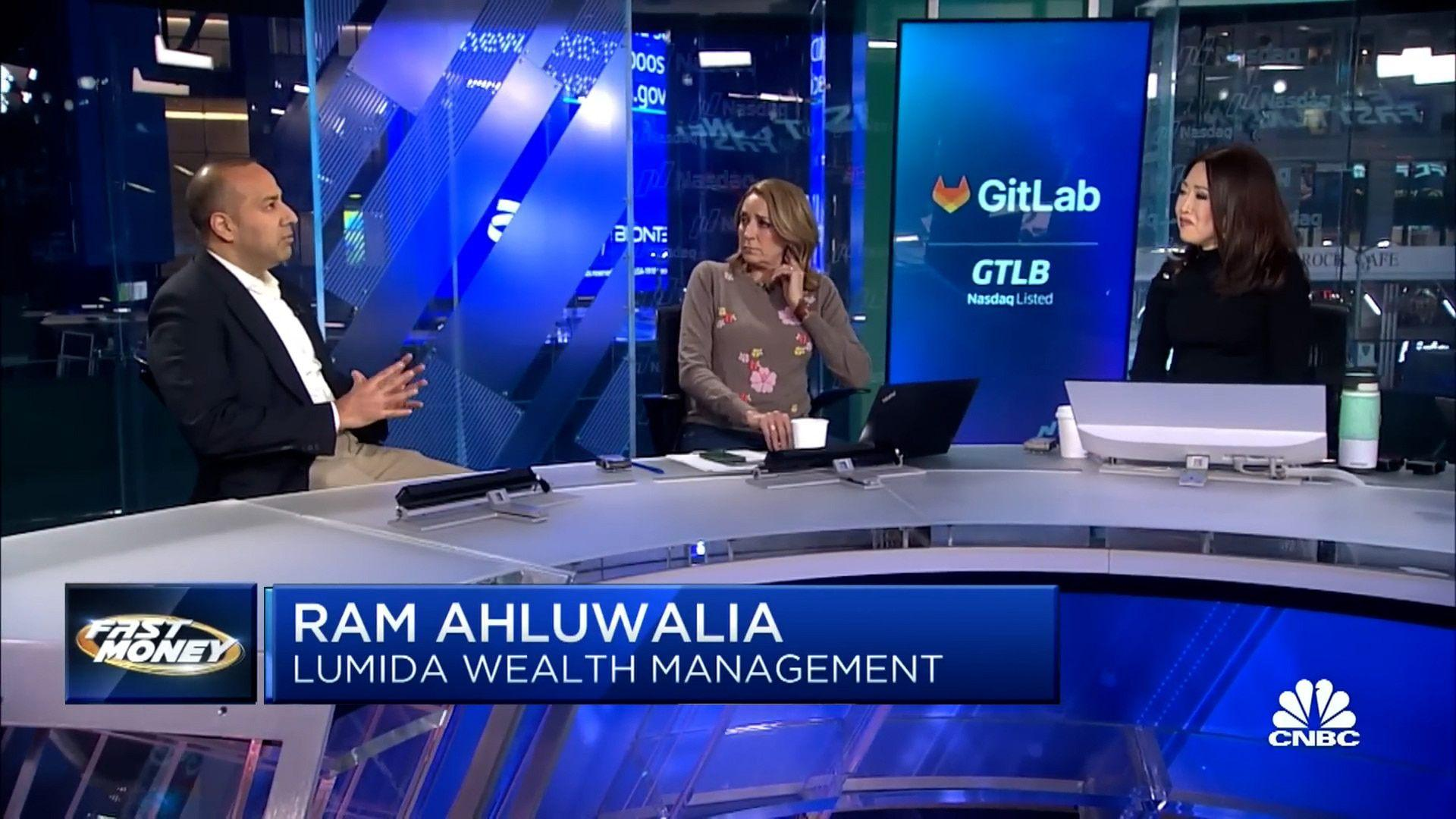
Ram Ahluwalia on CNBC Fast Money
Ram Ahluwalia on CNBC Fast Money.
Ram Ahluwalia, CFA Founder & CIO
Ram has spent more than two decades across wealth management, investing and fintech. He held leadership roles at Merrill Lynch and Bank of America, founded PeerIQ, later acquired by a16z and Ribbit backed Cross River Bank. A graduate of Phillips Exeter Academy and Columbia College, and a CFA charterholder, Ram brings a public-markets discipline to private-market investing.
WHO YOU'LL WORK WITH

The Team Behind Every Great Deal.

These are the people you'd deal with directly. Behind them sit our research, advice, product, engineering, and client service teams.


30employees2NY + NJ offices
Ram Ahluwalia

Ram Ahluwalia

Founder & CIO
Raymond Samuels

Raymond Samuels

Investment Advisor · Experience at UBS, Fidelity
Reegan Capozzoli

Reegan Capozzoli

Investment Advisor · Experience at Equitable
Rasik Sharma

Rasik Sharma

Investment Advisor · Experience at CIBC
HOW IT WORKS

We bring you the deal. You make the call.

01 · FIRST CONVERSATION

Start with a call

An advisor introduces our approach on the first call. We then check eligibility through our intake form and supporting documents. We discuss a specific deal only after that process is complete. There is no commitment at this stage.

02 · WHEN A DEAL OPENS

We come to you

After intake, your advisor may contact you when a deal opens. You can then review the company, the terms, and the risks in the official documents.

03 · YOUR DECISION

You take it from there

Read the official offering documents. Ask your advisor about the risks and terms. Then decide if it fits.

Want to learn how the review process works?

Schedule a Call →
SCHEDULE A CALL

Choose a time that works for you.

Meet a Lumida Advisor to learn how to review and access Defense Tech opportunities for Accredited investors.